Saturday, November 1, 2008

The Challenge of All Souls’ Day

By the way, just as a reminder/clarification. Those of you who were reading my reflections over the summer may have noticed that my language is a bit different now than then. The main reason for this is that my classmates (actually, only seven of them) are my "congregation" now. This represents an element of how we are trained to preach. Instead of making up homilies for an "imaginary" or "hypothetical" congregation, we simply preach to our brother seminarians. The theory is that this way of practicing will help us learn to interpret life with the scriptures better than trying to apply the scriptures to imagined conditions. So, if you're wondering why my language isn't gender-inclusive anymore, or why my reflections might seem less relevant to the average person in the pew, this is why. In fact, we are now recording our homilies, so in the next week or two it might be possible for me to post the video online. I had also thought some of you might find it interesting to see the way we evaluate one another's homilies in class. If you'd be interested in seeing the forms and the comments my classmates make, let me know and I'll ask if they would mind my posting them online for you all to see.

The Church gives us several options for readings to be used on the Commemoration of All the Faithful Departed (a.k.a. "All Souls' Day"). For my homily in class, I chose to work with Jn 11:32-45.


The picture we get from the accounts of Mother Theresa's life is one of a persistent, energetic, strong-willed advocate for the poor and down-trodden. The stories we hear of the people—the sick, the dying, the abandoned—that she sought out and brought in from the streets of Calcutta reveal a woman who was aggressive and irascible in her compassion. For Mother Theresa, no one was beyond hope. No one was beyond the reach of God's love. And no one, absolutely no one, would be allowed to forget that while in her presence. Her persistence in her work is such that I have this image of her up in Heaven, interceding, and by "interceding" I mean hounding, God on behalf of all those poor on the streets of Calcutta whom she still loves.

Now, why do I mention this? Well, I want to put this image of Mother Theresa in your minds as a stark contrast to the people in today's gospel—these people who are all too willing to be skeptical about Jesus' power to heal and save. The commentators will point out that there is a tendency to soften the harshness of Jesus' emotions as they are described in the original Greek. "Perturbed" doesn't quite capture the strength of Jesus' emotion here. The Greek vividly describes Jesus' anger, not sadness, at Martha, Mary and the Jews present—anger at their lack of faith in him and his power.

John, of course, gives us a relatively sober version of the story, but in my mind's eye I can see Jesus saying "Get that stone out of the way!" "But, Lord… there will be a stench…." "I SAID, MOVE THE STONE!" I think it would be wise on our part, brothers, not to imitate these people in the gospel today. Instead, we must ask ourselves whether we truly have the faith to facilitate Jesus' work, or whether we instead get in the way.

Do we always look at the occasions of sin as opportunities for God's omnipotent mercy to be manifested here and now?

Or, does our faith, like that of Martha and Mary in this story, stop at what Jesus could have done had things turned out differently?

When in the midst of the seemingly hopeless situation, when we are with people who seem to have placed themselves beyond the reach of love, what do we do?

Do we anticipate Jesus' miraculous redeeming power? Do we take the initiative to "roll away the stone?"

Or, do we stand there objecting when Jesus tells us to roll away the stones of poor choices and unseal the tombs of despair in which sinners are locked?

Admittedly, these are often even well-intentioned responses of people who understand the universal need for the salvation that Jesus offers.

On days like All Souls' when we take time to focus on those who have gone before us with the tell-tale signs of the bumps and bruises of life in a fallen world, we cannot help but be reminded of those we love who have gone before us not-so-clearly-marked by the sign of faith. The relevant question is do we despair over their salvation and abandon them in the tombs they have hewn? Or rather, do we think about the widow of Nain, who moves Jesus with her tears to raise her son, and go to work on their behalf in our prayer, pestering God to extend his mercy to those we love???

I call your attention to the Offertory prayer the Church prescribes for All Souls' Day…

O Lord Jesus Christ, King of Glory, deliver the souls of all the departed faithful from the sufferings of hell and from the deep pit; deliver them from the mouth of the lion, may they not be swallowed up by hell, may they not fall into darkness; but may Saint Michael, the standard-bearer, present them in holy light as you promised long ago to Abraham and his descendants. We offer our sacrifices and our prayers to you, O Lord; receive them for the souls that we are remembering today; O lord, make them pass from death into life as you promised…

Glory to Jesus Christ! Glory Forever!

~J

Love: The Measure of Christian Greatness

Readings for the 30th Week in Ordinary Time were from Ex 22:20-26; Ps 18:2-3, 3-4, 47, 51; 1 Thes 1:5c-10; and Mt 22:34-40.


Recently in our Special Moral class with Dr. Barrett, we've been reading a lot of Josef Pieper's work on the virtues. It struck me as I was going through the readings that he highlights acedia as being opposed to several of the virtues. He describes it as a fear of embracing the greatness for which God has destined us. This fear then leads us away from wanting to acquire virtue because we fear the responsibility, the greatness, that it brings.

But what does this greatness look like exactly? Christian greatness—our Lord makes it very clear in today's gospel—is loving "the Lord, your God, with all your heart, with all your soul, and with all your mind… and loving your neighbor as yourself." The two commands are inextricably linked with each other; the deepening in one perfects the practice of the other. But "Why is this true?"

Frank Sinatra had a song that went like this, "Falling in love with love is falling for make believe. Falling in love with love is playing a fool…." God bless Frank, but he had it all wrong! This is the very heart of the command that Jesus says sums up all the law and the prophets. Let me put it this way, only when we are indeed in love with love itself can we truly love as Jesus shows us, selflessly, loving others as ourselves and not for ourselves. But what does this look like?

Last week, I was talking with a priest from my diocese, and he shared with me his view of Jesus' embrace of the passion. He said, "I see a Jesus who leaps onto the cross and is happy to do it again and again and again." What a striking and yet perplexing image this is. How is it that Jesus can sacrifice himself, take on such terrible suffering, submit to such abject humiliation—and do it, not resentfully, not sorrowfully, not even hesitantly, but with sweet abandon?! The answer, at least in part, is that he can see how much his self-sacrifice helps us; he knows that it saves us, and he is happy to save us, no matter what the personal cost, because he loves us that much. His love for us is so perfect, so great, that our salvation brings him immense joy. His love for the Father above all else is what makes sharing a love of such intensity even possible. He can still delight in giving his love to all humanity, even to those people who will reject it, because he can delight in the act of loving itself. This is the fruit of placing the love of God, a love for love itself, ahead of all other love. It goes without saying that our call to act in the person of Christ as head and shepherd is a call to embrace this kind of love for God and for his people. It is a call to make the words of the psalmist our own where he says, "You have placed within my heart a marvelous love for the faithful ones who dwell in the land." It also goes without saying that this is a tall order.

But, we get to train for it; our time here at seminary, it seems to me, is filled with opportunities to prepare ourselves for this kind of self-gift. Think of all the ways in which we can practice generosity here at the seminary. We can share our livelihood. Something as simple as setting aside our spare change for the Baby bottle campaign. We can share our time, the most precious resource of the seminarian. Run a study group. Be a conversation partner for a guy learning a second language. But most importantly, take the time to notice whether a brother needs a hand, and if he does, offer it. And above all, we can share our very presence. Are we available to our brother seminarians? If they reach out to us, will we be there for them? Or, do we start checking our watches 10 minutes into Cam night? Complain for an entire week leading up to and following a retreat about the work we won't accomplish? Are we away from the campus every weekend working in a parish, so that when it comes time for endorsement, no one really knows who we are, and we don't really know anyone else? Are we preparing to act as Christ the shepherd present among the flock he has been given, or are we setting ourselves up for the "Where's Father?" award?

In short, the challenges of community life here and now are opportunities to reach out in selfless love. They are opportunities to become great Christians. If we run away from these challenges, we are running away from Christian greatness. It does not make a difference where we run to. At the end of the day, the double command of Jesus is the measuring stick which judges all the thoughts and actions of any Christian.

Now, if Christians are to be known by their love for one another, we who would be priests must always ask ourselves, "How will these good Christian people recognize me as their priest?" Frankly, if we do not first become great Christians by this standard, if we do not gain a love for love itself that makes us capable of always loving joyfully the fellow Christians surrounding us here and now, they never will.

Glory to Jesus Christ! Glory Forever!

~J

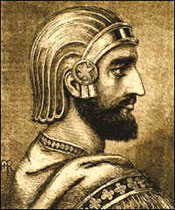
P.S. I usually like to include a picture with each post, but trying to find something appropriate for Christian love… well… let's just say the ad nauseam plethora of cutesy-poo images out there betrays the lack of seriousness with which people understand love. So, at least this picture at the top is impressive in its own right. God Bless!

Sunday, October 26, 2008

A Type of the Priesthood

Readings for the 29th Sunday in Ordinary Time were from Is 45:1, 4-6; Ps 96:1, 3, 4-5, 7-8, 9-10; 1 Thes 1:1-5b; and Mt 22:15-21

"I have called you by your name, giving you a title, though you knew me not."

My brothers, I am convinced that Cyrus is a type of our call to the priesthood. In the midst of the frustrations and busy-ness of these mid-term weeks, we must not allow ourselves to forget that it is the Lord who has brought us here, "though we knew him not."

Consider our lives in formation… where would we be if not here? I don't mean on the level of profession or educational track, married or not… these are not the truly important questions. The real question is, "Would I be on the path to holiness God even leveled for me, or down in the ditch with the devil?" "Would I be walking down the path of 'open doors and unbarred gates'—the path of the sacraments, of spiritual direction, of holy trial and self-discipline—or beating my head against the walls of regret, mediocrity, uncertainty, and the status quo?" I can certainly look back on my own life before I was a seminarian and see the possibilities, things I could have done… things I might would have liked to do… but that's all I see, only possibilities, only mere dreams and shadows of what I have actually done so far.

What was I before I was a seminarian? Well, St. Francis of Assisi liked to say, "What a man is in God's eyes, that he is and nothing more." So again, we must ask the question, "What would I be in God's eyes had I said 'no' to his call on my life to come to seminary?" "Would I be a useful servant?" "Whom would I be serving?" He is the Lord, and there is no other!

But we object, don't we?! We experience failures, we see our shortcomings, we come face to face with our utter unworthiness to be anything at all in God's eyes… and we 'praise' Jesus tongue-in-cheek like the Pharisees of this Sunday's gospel. "Jesus, you are truthful."—Yet you must have been trying to make me feel good about myself when you called me… "Jesus, you teach the way of God."—But I already know that I'm a useless pupil, a dunce, and unable to learn anything at all… "Jesus, you are not driven by human respect."—So you must have ignored all those people who remember just how selfish I used to be, how immoral, how ignorant… Jesus, are you sure you consulted enough before you called me? "Jesus, you take no notice of status."—Hmph. Obviously. All of this, brothers, is to forget the purpose of our call.

Our call is not for ourselves, it is for the People of God. Look back to Cyrus… why does God call him, a non-Jew? "So that toward the rising and the setting of the sun people may know that there is none besides me." Our formation for the priesthood is meant to be a wonder to behold, a miraculous feat of transformation from sinner to saint, from selfishness to self-sacrifice. God has called us—precisely—to demonstrate his power so that when the course of our lives is considered, all will truly say to the Lord, "You are God and there is no other… There is none other who grasps us by the hand."

Glory to Jesus Christ! Glory Forever!

~J

Saturday, October 18, 2008

The Kingdom of God and High-school Nightmares

This Past Sunday's Readings were from Is 25:6-10a; Ps 23:1-3a, 3b-4, 5, 6; Phil 4:12-14, 19-20; Mt 22:1-14 or 22:1-10


I have yet to encounter anyone who hasn't, at some time or other, been plagued by the nightmare of showing up at school clad in nothing but their underwear. (Or at least some permutation of that dream) I had these dreams for years in one form or another, and what I find striking about them in retrospect, particularly the nightmares I would have about school, is that they never had anything to do with being unable to do schoolwork. I never dreamt about not knowing how to spell a word, do a math problem, or botching a report in front of the class. Instead, the nightmare always entailed doing something right, achieving some little success, only to turn to my classmates and find that "mysteriously" there was nothing between me and their penetrating stares except some Fruit of the Loom. Usually, it was at this point in the dream, as all my classmates started pointing and laughing, that I would remember I had indeed neglected to put on all of my clothes before leaving the house that morning. These kinds of dreams express something critical about the real world: true preparedness has more to do with the context of a job than with the task at hand itself.

This is what I see as the thrust of this Sunday's readings. What we see in the gospel today, for instance, is that there really is no moral pre-condition for an invitation to the wedding feast. The king's men go out and bring in everybody—the good, the bad, and most assuredly, the ugly. At the wedding feast of the king's son, it is the future of the realm that is at stake. It makes sense, then, that the current state of the guests invited is of less importance than their potential—whether or not they are prepared to enter into the celebration properly. Out of the entire motley crew the servants gather in, only one has utterly missed the point and, with no excuse, has neglected to wear the proper attire. This one's failure is not any different than the failure of all those who previously rejected the king's invitation and killed his messengers. The gospel says, "Some ignored the invitation and went away, one to his farm, another to his business." We see in these poor people the tragedy of getting so entangled in the web of one's everyday affairs that the ultimate purpose of all work—the kingdom—gets forgotten.

Now, the paradise Isaiah describes for us today is nothing else than the ultimate fulfillment of God's grand design of salvation. This, is the end for which we are all destined. All of our undertakings, all of our concerns, our struggles, trials, and successes are means to that final end at best and distractions from it at worst.

Here at Mundelein, we are like that motley crew gathered in by the king's servants. We come here, from all walks of life, from all situations and backgrounds. Not one of us is here because he was "worthy" as his vocation director found him but because he showed some promise of becoming so. The challenge at hand, then, is whether or not we are properly open to be formed here at seminary. At the core of what we do here we find theology, prayer, pastoral work, and the like. But just as it is totally inappropriate for one to do arithmetic, spelling, or whatever, in grammar school dressed in his underwear can we undertake our responsibilities here without the faith that our ultimate destination is to be servants at the eternal wedding feast. This is the context of our work. This faith, this knowledge, this hope, is our garment of preparedness.

Glory to Jesus Christ! Glory Forever!

~J
Sunday, October 5, 2008

Where Do Great Priests Come From?

Today's readings are taken from Is 5:1-7; Ps 80:9, 12, 13-14, 15-16, 19-20; Phil 4:6-9; and Mt 21:33-43

There's a series of ads on TV for California dairy products. They each feature some goofy situation with talking cows enjoying the sun and the fun of the California environment. Then, at the end of each commercial, is the slogan, "Great cheese comes from happy cows. Happy cows come from California." This Sunday's readings provide us seminarians with the answer to a similar, though infinitely more relevant question, "Where do great priests come from?"

Beginning with the selection from Isaiah, we see the image of Landowner and vineyard extended and developed, sometimes subtly and at other times bluntly. It occurs to me that priests, in many ways, are called to be the 'new tenants' the scribes and Pharisees predict in the gospel. However, I don't think we can make that jump without first recognizing that the entire People of God is the vineyard itself. When we see that this is true, we have to recognize that we all start out as little grapes on the vine being tended by other vinedressers.

This image is particularly important for us as seminarians; we must reflect on how it has come about that we are here. We must ask questions like, "From what exactly did God uproot me, and from what is he still trying to uproot me, so that he could plant me here in this 'seed-bed' we call Mundelein?" As we look around us, do we notice and appreciate the soil of the seminary system the Lord has tilled for us? the hedges, and the watchtower, the seminary faculty, that he has built up for our protection? Finally, and most importantly, do we recognize ordination as the wine-press that it truly is?

What we hear from St. Paul today makes it very clear that nothing is too good for the vineyard of the Lord. After all, its mission is to produce a choice wine. And herein lies the poignant mystery of our years here: having no anxiety at all, we must learn to see, appreciate, and emulate the goodness into which God has transplanted us, knowing all the while that our purpose is "the press" of the laying on of hands. In a sense then, the goal of all the care showered upon us here is our very destruction. Yet, in the paschal mystery of Christ, we have resurrection. Where do great priests, humble and responsible tenant vinedressers come from? In God's design, they come from the sweetest, plumpest, and most thoroughly crushed grapes.


Glory to Jesus Christ! Glory Forever!

~J

Thursday, September 18, 2008

The Kingdom’s HR Department

Something I enjoy thinking about when I'm getting frustrated in my work or with my struggle for deepening conversion to Christ is the looks of joy on the faces of the Blessed Mother and all the saints when one day, by the grace of God, I'll cross the threshold of Heaven. I find great encouragement in imagining what the joy in heaven over my repentance would look like and what the consequent welcome into paradise I might receive would entail—shaking hands with the Doctors of the Church, pats on the back from the Martyrs, perhaps a solid punch in the arm from the Apostles, and a true mother's embrace and kiss on the forehead from Mary… It truly is a beautiful image to think about our welcome into the City of God.

Contrast this with the resentment of the early-bird workers in this Sunday's gospel. Rather than rejoicing that their brethren finally received some gainful employment, they are resentful of their master's generosity. It is clear that the laborers have little, if any, connection to one another. There is no rejoicing over the good fortune of those who come late to the vineyard, and apparently no promise of any sharing in the benefits of the landowner's generosity. We must never allow this to be the image of our work for God's kingdom.

On a very practical level, I'm left wondering where all of these extra laborers kept coming from throughout the day. Jesus does make it sound as if there is a constant trickle of new laborers coming to the marketplace for the landlord to hire each time he goes out. What I would be left wondering if this were a real-world situation is, "Why aren't the workers bringing one another to the vineyard?" There is very clearly more than enough work to go around. This lack of sharing the good news of employment actually makes more work for the vineyard owner who must constantly go out looking again and again for more workers.

I think Jesus is telling us something here about the immensity of the work of the kingdom. It is a task that will require the labor of every single person on earth, not only the most industrious early risers. No, the task of restoring the fallen state of creation back to God's original plan demands the participation and struggle of every single one of us. Particularly for those of us who will be priests, this means that along with our labor in the vineyard itself, we also must take on the responsibility of inviting our brothers and sisters with us into the fields. As a very wise priest once said, "Our journey to Heaven is not about being able to say to the Lord, 'Look, here I am!' but rather 'Look, here I am, and see whom I have brought with me!'" Then, and only then, will we truly be in a position to rejoice over the lavish generosity of our Heavenly Father.

Glory to Jesus Christ! Glory Forever!

~J

P.S. I am back at Mundelein, and this reflection was for our Cam night on 3-Blvd last night. Thought I'd post it just to give some kind of update. Things are off to a fast start; not even two weeks into things, I'm already behind! There are still pictures from some of my 'adventures' over the summer I'd like to be able to post.

Thursday, July 17, 2008

Out of Nothing

Today's readings come from Is 10:5-7, 13b-16; Ps 94:5-6, 7-8, 9-10, 14-15; and Mt 11:25-27

As I was reading Jesus' words in the gospel today about the Father's revelation of his love and power to the "childlike," I was reminded of an event that happened during my time at Sarnelli House.

It was a cold, rainy, foggy, miserable day in Kensington—one of those days where you need only step outside and the cold penetrates right to your bones. It was a Tuesday, and on Tuesdays we would always let our guests from the streets come in to take a shower, get new underclothes, and whatever other types of clothing they might need. As our guests were filing in that Tuesday, though, I remember thinking to myself, "Y'know, I have to wonder why God allows this. I think if it were me out there in weather like this, I would just have to say to God, 'Take me… take me now, this just isn't worth it.'" As we prayed with our guests, the way we always began anything we did at Sarnelli House, Dennis, crippled years earlier when a bus had run over him, got up on his crutches to say, "I just want to thank the Lord for waking me up this morning and giving me another day of life." I knew that the best accommodations he had found the night before were probably a cardboard box. His prayer hit me like few other epiphanies ever have. He got it… he, this homeless man from the streets where the Rocky movies were filmed, had an understanding of God's love and providential care that far outstripped mine, a college graduate with a BA in Religious Studies.

Again and again we see this theme echoed throughout scripture: God works with nothing. Out of nothing, God brings good. Out of weakness, God brings strength. Out of humility, God brings honor. Out of emptiness, God brings love. Out of ignorance and meekness, God brings wisdom. This is what we hear Jesus saying in the gospel today and it is what we hear in the irony of the passage from Isaiah.

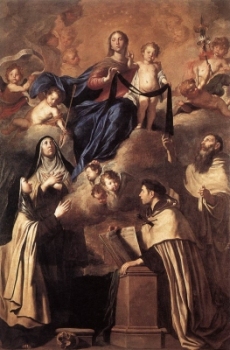
Today, we commemorate the appearance of Our Lady on Mt. Carmel. I think that oftentimes in the language of Marian devotion we lose sight of the full significance of Mary's virginity. God brought forth a child from a virgin. This is the example par excellence of God's method of working through human beings, bringing wonders forth from what they lack. In Mary's example, we see that God does not need our "help," at least as far as our accomplishments go, so much as he needs our openness to him—our openness to allowing him to supply everything we lack on our own.

For today, then, let us give some thought to our own weakness, emptiness, foolishness, and so forth, and ask the Lord, who loves us with an undivided heart, to give us the grace to be more open to him so that he might work his wonders through us. Let us also think about those ways in which perhaps we are over-confident in our own abilities, or proud of our own accomplishments, and ask God to help us see in what ways the things we "have to offer" might actually be getting in the way of the work God longs to accomplish through what we lack.

Glory to Jesus Christ! Glory Forever!

~J

Wednesday, July 9, 2008

Why Them? Why Me? Why us?

Today's readings come from Hosea 10:1-3, 7-8, 12; Psalm 105:2-7; and Matthew 10:1-7


It was just under a year ago that I was moving my things into the residence hall at Mundelein Seminary. Even though I had visited the campus twice before, this was my first opportunity to look at the little details. One of the things anyone notices once they start looking around is that the builders found a way to put a cross just about anywhere. They're on the doorknobs, the lampposts, the tops of the buildings, pretty much anywhere you look, basically. As joyously has I had received the Rite of Candidacy, and as happy as I was to be there with David and Michael, all I was saying to myself was, "What the *%&$# was I thinking to come here?! Let's see… I could probably get down to O'Hare pretty easily from here and jump a plane to… just about anywhere but here would do." Thankfully, I didn't run; I stayed and went through a period of adjustment during which God placed the right people in my life to say the right things at the right time.

One day, I was having a conversation with (now Father) Lance who lived across the hall from me. Lance was in his mid-late forties, had been and accountant, and at one time had even been the CFO of one the native tribes in Wisconsin. (Translation… high-powered job handling tens of millions of dollars.) We were discussing the questions that arise for a man as he goes throughout seminary formation: worthiness, feasibility, confusion, and so forth. He said to me,

Jay, I've become convinced that the Gospels are explicitly clear on these issues. Whenever I find myself asking the question, "Why am I here?" I remember the example of the apostles. Look at who Jesus picked to surround himself and carry out the mission of spreading the gospel: fisherman, laborers, a tax collector… not a single scribe or Pharisee among them. I'm sure that at the time, they had no idea why Jesus called them, but they persevered in a trust that they had some role to play in God's plan of salvation.

If you think about it, Jesus didn't say to Peter when he met him, "Come, follow me, I want you to be the head of the People of God in a new covenant that I am mediating between God and all of humanity." NO! I highly doubt that he would have gotten anywhere with that approach! All he said was, "Come, follow me." And Peter followed, putting one foot in front of the other, making mistakes, but eventually allowing God's plan for him to unfold over time.

We cannot know why it is that Christ chose those twelve men, including Judas, or why God chose Israel, or why the Spirit chooses us now. As we look at this week's readings from Hosea, it is abundantly clear that we all cause God no small amount of grief! Nevertheless, God has chosen us, and all he needs from us is our assent to put one foot in front of the other, following him each day until our role in his plan of salvation unfolds throughout our lives.

Glory to Jesus Christ! Glory Forever!

~J
Wednesday, July 2, 2008

Portraits of Fear


Today's readings are from Amos 5:14-15, 21-24; Psalm 50:7-13, 16-17; and Matthew 8:28-34.

Between the first reading today and the Gospel, we get two different portraits of fear—one is of healthy, genuine fear of the Lord, the other is unhealthy, a fear of God's love and power. In the reading from Amos, Israel is exhorted very harshly to cease and desist its evil deeds, namely the gross social injustice which it had allowed to run rampant in its society. We see a God depicted who is extremely dissatisfied with the state of this fledgling nation that he had brought up out of Egypt. In his anger, which seems to be the dominant theme of this week's Old Testament readings from Amos, God is ready, willing, and able to discipline his people. Note well, however, that discipline is always an outgrowth of love, and we are told that it is indeed out of his love for Israel that God plans such discipline.

Then on the other hand, in today's gospel we see the Gadarenes (or Gerasenes, if you have a different translation) who cannot get Jesus out of their territory fast enough after he exorcises the two possessed men. Jesus manifests his divine power to dispel the forces of evil in an act of profound healing, yet the people's response is one of fear. It is very clearly not the response Jesus was hoping for, yet what we see in the first reading today is essentially an exhortation to be afraid of God's power. Are you confused yet?

The key to understanding these contraries, notice I do not say "contradictions," lies in understanding the nature of God's love for us. God's love for us is multi-faceted; it both includes and transcends friendship, romance, respect, and yes, parental love. In our attempts to relate to God, we cannot forget that all of these elements must be present since it is through all of these ways, and then some, that God extends his love to us.

I can remember quite vividly "The Spoon" from my childhood. Yes, the infamous tool of discipline that was placed conspicuously within my mother's reach whenever I was getting just a little too uppity. I knew all too well why it was there and how it would be used if my behavior didn't change. However, I also remember just as clearly the cuts, scrapes, and bruises that my mother cleaned, bandaged, and kissed and the profound sense of being loved that those actions brought with them. Now, as an adult, I can look back even on "The Spoon" and see how loving the discipline was that I received as well.

What we see in the Gadarenes today is a rejection of the all-encompassing, multi-faceted love of God, namely its power to dispel evil and to effect enormous, life-altering transformations. What we cannot fail to miss in their example is just how natural it is to have such an adverse reaction to Love and how Jesus exhibits understanding and patience in the face of such a rejection. God understands that we are in need of growth and that human growth takes time. Nevertheless, what we cannot fail to take away from the first reading is that growth is not optional. God expects us to use the blessings of his love, not to squander them, and we will be held accountable for our use, or disuse, of what God has freely given. In his love, he reaches out to us—to heal and to discipline.

So for today, let's pray about those areas of our life where we have been resistant to some aspect of God's love for us, and ask him for the grace to open our hearts more to the love he wants to give us.

Glory to Jesus Christ! Glory forever!

~J

Wednesday, June 25, 2008

Mundelein Music

Well, it took me a while to figure this one out, but I think I've finally come up with a way to put some music up on my blog. Hurray! Try right-clicking the blog title and opening the link in a new tab (or window). It should take you to the online storage site Box.net and give you the option to either download or stream the recording of the Mundelein Chant Schola doing the Pentecost Sequence. Let me know if it works for you!

~J

Judgment vs. Discernment


Whew! Ok, I can finally say that I have "arrived" at Our Lady of the Assumption Parish here in Latham, NY. Actually, I showed up on June 6th, was here for a week, left for our Seminarians' Summer Gathering, and have been back for almost another week. Today, however, I gave my first reflection at the 9:00AM daily Mass. I have so much to share about what's been going on since the quarter ended out at Mundelein—I've been here, there, and everywhere—but I wanted to start right away with sharing my weekly reflections. (Fr. Burke and I have worked it out that I'll give a reflection every Wednesday at the daily Mass. I figure these will also make good blogs… and a chance for you to… um… give me feedback? Pretty please?) Anyhow, this week and into next week, our 1st readings are taken from the 2nd Book of Kings; we're getting to hear the saga of which kings were faithful and which kings were responsible for getting Israel and Judah carried off into exile. The gospel passages are from Matthew. Today, specifically, the readings were 2 Kings 22:8-13, 23:1-3; Psalm 119:33-40; and Matthew 7:15-20.

Today's psalm speaks about discernment, and I think that this is a very important theme running throughout these readings. Did anyone notice the tension between today's gospel telling us to beware of false prophets and Monday's gospel telling us not to judge one another? Or did you notice, back in Monday's first reading, that Israel is essentially led off into exile because it behaved in exactly the same way as the nations all around it, "whom the Lord had cleared out of the way of the children of Israel," only to hear in the gospel "Why do you notice the splinter in your brother's eye, but do not perceive the wooden beam in your own eye?" These readings all highlight the difference between judgment and discernment.

We certainly cannot pass judgment on anyone's relationship with God. We cannot know the state of a person's soul or the inmost dispositions of someone's heart. These things are the matter for God's final judgment and therefore are no cause for concern on our part beyond the obligations of charity. Nevertheless, we are called, in today's gospel, to exercise discernment when it comes to behaviors. We must judge right from wrong in people's actions and we would be stupid not to notice patterns. We must be on guard against the abuses of people who time and again behave selfishly, foolishly, angrily, faithlessly and so forth. That is, we must be on guard that we do not come to imitate their examples.

On the flip side of this, however, we must be aware at all times that people are watching us and judging our behaviors and drawing conclusions about us from what they see. Their judgments of our behaviors will reflect on the faith we profess. For instance, what message would it send if a daily "Mass-goer" were to be a total Scrooge when it came to finances? What if it were obvious that they never knew what it was to give a gift or send money to a charitable organization? Or, on the other hand, what if it was well-known that they were frivolous with their money, spending dollar after dollar on every silly little luxury but running out of funds for basic needs? In each of these extreme cases, we would see someone who doesn't really believe that they have a role in God's plan of salvation for others. Both, while in different ways, refuse to provide for others. What kind of faith does that show? Do we believe that irresponsibility is a good thing? Certainly not, but were we to behave this way, why should anyone think otherwise? The same goes for things like worry: worry too much and it shows that you don't trust in God's providence, get too fancy-free and people will think that you have no real care for the future. How could a worry-filled person inspire anyone to trust in God, and who in their right mind would listen to the exhortation to "Let go and let God" from someone who clearly wouldn't prepare for future problems anyhow? This type of thinking applies to just about any subject that touches on the virtues.

To sum it all up, we always need to be mindful both of whose examples we follow and the type of examples we set. Both are obligations of charity, the first to ourselves, the second to our neighbor.

Friday, May 2, 2008

Excursus: The Road to Priesthood

Well, April has been one wild ride out here at Mundelein! Most notably, we had our bus trip to St. Joseph's Seminary in New York to see… drum roll, please… THE POPE! Yeah, that's right, the successor of St. Peter, Chief of Apostles, here, in the flesh, on our own native soil. What an experience! What's more… I even have pictures! The problem, however, is that I can't get the pictures off my camera and onto my computer. The camera's driver software is not Vista compatible, and since upgrading to Vista, my card reader no longer works. Alas. So… I'm going to wait to blog on the Pope-trip, or Pope-Mania as one of our seminary professors took to calling it, until I can post with pics.

For now, I want to address some of the questions that were left in the comments to my last post which had to do with the process of becoming a priest. You know, I never cease to be surprised by how many people are unfamiliar with the process of becoming a priest. I meet several people, for instance, who think that seminarians are priests, or that it is a relatively quick process to become a priest. I suppose we can attribute these widespread misconceptions to the rarity of men answering God's call to the ordained priesthood in our times. It's just so rare for many Catholics to actually know a seminarian that I can understand why the process can seem so mysterious. Well, it's time to clear up the mystery!

Question 1: How long does it take to become a priest?

Answer: According to the current rules set out in the Program for Priestly Formation (PPF), the process requires two full years of a "Pre-Theology" program, or four years at a college seminary, and then four years in a "Theology" program at an approved Catholic major seminary. So, in the Unites States, where most dioceses and religious orders (if not all) require a bachelor's degree before they will sponsor a man at a major seminary, this all adds up to a minimum of four years beyond the Bachelor's degree (if coming from a college seminary) or six years after the Bachelor's if one needs to go through a "Pre-Theology" program. (That's my track, though I got grandfathered in under older requirements so it will only work out to five years beyond the Bachelor's.)

What is entailed in these two programs? Well, here's the simple version. The PPF outlines four areas of formation: human, spiritual, intellectual, and pastoral. Human formation focuses on helping a man to form himself into a healthy, celibate, sociable, respectable, wholesome leader (in a nutshell). Spiritual formation then seeks to help that man ground himself in a life of prayer so that he will become ever more conformed to the person of Jesus Christ as head and shepherd in whose name he will do all of his ministry. Intellectual formation strives to prepare men to be effective teachers and preachers of God's Word—teachers who know the Christian Tradition well enough to help the Church discern what it can use to spread the Gospel and what it cannot. Finally, pastoral formation has as its goal showing a man how to take the fruits of the other three areas and use them successfully in ministry to the People of God. Essentially, these four "pillars" of formation determine the content of all programs at a college seminary, a pre-theology program, or a major seminary. The main difference would be the proportions in which these various elements are combined and their particular focuses. Generally, pre-theology focuses on philosophy whereas theology focuses on… theology… go figure! Human formation at the pre-theology level focuses on discernment, developing a prayer life, and getting a man used to being a public figure. At the theology level, this is continued, though with more intense and specific expectations.

Question 2: When will you be ordained?

Answer: Well, if all goes according to plan, I will be ordained a transitional deacon in May of 2010 and a priest of Jesus Christ in June of 2011.

Question 3: What if you change your mind? Can you back out?

Answer: Yes. to put it frankly. A man can leave his formation program at any point before his diaconal ordination. However, along the way, one receives the Rite of Candidacy which can be understood as a public commitment to devote oneself fully to the formation for these Holy Orders of Deacon and Priest. (It is very much like the commitment involved when one gets engaged.) After that, one may still leave, but it is generally expected that one's discernment of his vocation should be quite certain before he receives candidacy, as well as his superiors' discernment of his fitness for these orders.

Question 4: How could you tell this is what you wanted to do and when did you know?

Answer: To be honest, my discernment process took a really long time; it's been something I've thought about since I was a little boy. In fact, I really could do several posts on the discernment process alone, and will do so if there's enough interest. To make a long story short, though, I would say there are two necessary components to discernment, for anything, not just the priesthood: prayer and consultation. First of all, as Christians, we are all called to be men and women of prayer. In prayer, we must lay ourselves at the Lord's feet and say, "your will be done," with sweet abandon. Then, we need to shut up and listen to the movements of the Holy Spirit within the depths of our hearts. As one priest said to me, "Ask the Lord what he wants you to do, and he'll tell ya." That was some of the best advice anyone has ever given me. Then, we cannot allow our spiritual lives to become a closed conversation between us and God. Just about everything God gives to us in prayer, like all of the blessings he gives us, are meant to be shared with others. In the discernment of one's vocation, this looks like trying out different forms of ministry and listening closely to the feedback people give you. For me, I have almost always had people telling me that I should become a priest, that I would make a good priest, and so forth. As one of our professors here summarizes it, "Your vocation is from God, but who gets to say that you're really called by God? The Church." It's easy to see the common sense of this. I might have all the desire in the world to be a priest, but if when I give scripture reflections, or try to counsel people and they fall asleep in boredom or invariably get horribly offended or confused… the chances are my call is not authentic. God always supplies the grace needed to answer his call. If the gifts just aren't there… most likely the call isn't there either.

For me, I was not able to make the decision to apply to my diocese until two years after finishing college. I was volunteering full-time with the Redemptorists in inner-city Philadelphia working with the homeless and prisoners. My time there was steeped in communal prayer, service, and the constant review and correction that comes from living in a healthy community. I also had a spiritual director who helped me to ask God the right questions in my prayer and to understand the answers I was receiving. After getting a taste of social work, teaching, counseling and apostolic work, I could see that I valued elements of all these things, but couldn't see myself doing only one of them as my "day-job." On top of that, I began to notice how unique my appreciation for the liturgy and my enjoyment of leading the community in prayer really was. When I put all of these elements together, along with what I had recognized as an inexplicable "leaning" toward the priesthood, I knew I had to take a closer look and become a seminarian.

I hope this clears up some questions, but if there are more, don't hesitate to ask!

Until next time, God Bless!

~J

Thursday, March 27, 2008

Oh, and by the way…

When I set up this blog, I was hoping that it would serve three purposes: 1) It would eliminate the need for my periodic "newsletter e-mail" to my friends and family telling them how things were going, 2) It would provide an easy method of explaining to those discerning their vocation what a seminarian's life is really like through my posts talking about what was on my mind, and 3) It would provide a fast, easy way to answer people's questions about the Church, my life as a seminarian, etc. So far, it seems to be serving my first two purposes well. If you've been a regular reader… and I mean regular in the loosest sense of the word… you will have noticed, and probably will have remarked to me, that I need to post more frequently and regularly. Well, you're not wrong, but I need your help! Please, don't be afraid to leave comments on my posts, or ask for clarification. Don't hesitate to e-mail me with questions you'd like me to answer in my posts. I would appreciate it greatly if you would tell me the types of things you want to read about. I am busy here at Mundelein, but usually the reason I don't post is because I simply can't make up my mind to blog about. So, make up my mind for me! Don't be scared!

On another front… I've been working with my Spanish conversation partner, Angel Delfin from the Diocese of Kansas City-St. Joseph on creating a Spanish version of my blog. If all goes well, it should be up in a couple of weeks. Keep your fingers crossed.

Resurrection Reflection

As I sit here in my room at the seminary on this Holy Saturday, I am moved to look back on this year’s Lent and evaluate. How far did I come in my spiritual journey? How much progress did I make in letting go of my favorite vices? Am I ready to go to walk the via dolorosa with Jesus, to lie with him in the tomb, all the while having a solid hope in the resurrection??? As I ponder these questions, it occurs to me that I’m going to need another Lent… many, many more Lents, actually….

Now this is not to say that my Lent has been fruitless, by no means could I say that honestly. But as our “surprise” snow storm out here at Mundelein can teach us—conveniently orchestrated on the first full day of spring—the momentum of the past does not dissipate quickly or easily. Just like Old Man Winter can still sneak in those last-ditch efforts to cover us in fluffy water, so too our habits and the attachment to ways of living life can ensnare us time and again despite our best efforts.

I have grown this Lent in my devotion to daily prayer and keeping the Liturgy of the Hours. Yet, I am still so easily distracted or sidetracked in my prayer and I don’t really treat my one-on-one time with God as carefully as I treat that time with my friends. While I didn’t give up sweets entirely this Lent, I have gotten a lot better at telling myself “no” to this, that, or the other culinary delight and have managed to lose about five pounds. Nevertheless, walking through a store filled with Easter candy only leads me to think, “Hmm… this really is a time of celebration… and those little Peeps chicks are only out once a year… along with the Reese’s Peanut Butter Eggs, Cadbury Cream Eggs, malted eggs, jelly beans… oh, and how often to we get to eat chocolate bunny rabbits??? Like… never!” (To be perfectly honest with you, I know that I’d eat the grass out of the Easter basket if I could!) But on a more serious note, I have come to realize just how central the cross of Jesus Christ really is to the Christian’s spiritual journey. No matter what our particular vocation, be it to the married life, to Holy Orders or religious life, or to the generous single life, we’re all headed for the cross, folks. There’s no getting out of it.

Nevertheless, I’ve come to see how easily I’m tempted into forgetting that. For all of you out there who have doubts about the feasibility of actually living a celibate life, I’ll admit that there are nights when it weighs upon my heart that I will never know what it is to fall asleep and wake up next to the same person day after day, week after week, month after month, year after year. But lest I get caught up in dreaming about just how green the grass on the other side of the fence could be, I think about the married couples I know. As in love with one another as they may be, their lives are not cakewalks by any stretch of the imagination. The young couples I know struggle to avoid bankruptcy while starting their families. Each pregnancy brings with it a whole host of questions about the future. How will we afford (insert your favorite absolutely necessary thing here) and our heat for the next ten years? What if the baby isn’t healthy and we’re faced with raising a special-needs child? How will we handle it? Older couples aren’t out of the woods either, they still deal with keeping their marriages alive and vibrant while living out all the decisions they made (for better or for worse) in their youth. Sure, Husband A hates his job, but it’s the only thing right now that’s putting food on the table and keeping the kids in a decent school. Wife B put her career on hold to raise the kids and now that they’re off to college she doesn’t know what to do with herself. Go back to school? Start a new job? Compete in the work-force with a host of cutting-edge-twenty-somethings? We won’t even go near the fact that the divorce rate among American Catholics is now the same as for the rest of the population at 50%. No… no, marriage is not an easier life than mine, especially not if one really wants to do it the Christian way.

What about the generous single life? There is a part of me, small but very vocal, that would like to be rich… no, not just rich… fabulously wealthy. Even as a seminarian, people open up to me about their various needs. They ask me to pray for them, and I do because I know it’s important and that it helps. Yet, I can’t seem to shake the suspicion that $5,000 would do a lot more to help the single mother with two children who needs a new furnace in the dead of winter than… say… a rosary. Along the same lines, I can’t get rid of the crazy, half-baked idea that $1,000,000 would help the Blessed Sarnelli Community in Philadelphia accomplish its building goals and get its residential volunteer component up and running a whole lot faster than my intercessions at Morning Prayer. On the other hand, though, I have yet to meet a single person who can say that their lifestyle embodies their “Plan A.” The younger single people I know just haven’t yet met the right person, or they are discerning a call to priesthood or religious life. They certainly aren’t planning on being perpetual bachelors or bachelorettes. The older single people I know are most commonly widowed or divorced; either way, they are single as a result of some very painful event. There are, of course, exceptions to this. I do know a small handful of older single people who have devoted themselves to careers, have achieved great financial success, and now are free to give the support to charitable causes that they (the causes) truly need. Yet, they do seem to be removed from the work itself at least one step. They are free to support the work but not really free to do it themselves. Surprise, surprise… it’s a trade-off. Nonetheless, it is a removal that I think I would find exceedingly frustrated. As comfortable with working behind the scenes as I am, I still want to be hands-on.

So, the process of elimination that is my discernment continues. I have so far to go, so much growth must happen before I truly have a single-hearted and single-minded love for my vocation to the ordained priesthood. At times, I do wonder whether it will ever come. I stumbled across something in the scriptures a few weeks ago, though, that is giving me a great deal of solace.

Near the end of Lent this year, we heard St. John’s account of Jesus raising Lazarus from the dead. It had never struck me before that there is a waiting period between the time of death and resurrection. For Lazarus, it is four days, and for our Lord, three days. Why? Within the context of the Gospel storyline, Lazarus’ downtime seems to have a very practical reason for being: Jesus wants to make sure that it’s clear Lazarus is really dead so that God’s glory can be more clearly revealed when he is raised. Jesus’ resurrection on the third day, of course, has significant mystical significance, jiving with Old Testament prophecies and so forth. But certainly, it is within God’s power to prevent death and to restore life at any time. Presumably, if God had desired it, he could have raised Jesus after three hours or three minutes post mortem. Yet, even Jesus lay in the tomb for three days, and depending on how one renders the Greek into English, one can even understand that Lazarus began rotting in his tomb before Jesus’ arrival.


It’s clear that before new life can come, old life must pass away. We are used to seeing this around us every day. Spiritually, it is apparent that before we can lead grace-filled lives, we have to die to sin. What has only become clear to me now is death, in a very sterile, clinical sense, is not all that it takes for new life to blossom. No, death followed by decay, that is, decomposition, must precede resurrection, a recomposition. In very tangible ways, we can see that death, in all its forms, does not immediately destroy all semblances of the life that was present. A corpse remains warm and soft for quite some time before rigor mortis sets in. The body itself, which has been composed throughout a lifetime of growth, persists for years, decades, even centuries. The spirit is no different. Talk to a “former” smoker. Most will tell you that even after some ten or fifteen years since having a cigarette, they will still get cravings. Talk to an AA group. Getting the alcohol out of one’s system is relatively easy compared to relearning how to face the everyday situations of life sober. As the saying goes, ‘Old habits die hard.’

As frustrating as it can be waiting to see the progress in my life, I can see now that it is reasonable to expect to need a great deal of patience waiting for new life. This will come, as will all God's graces, when God is good and ready to give it to me. But in the meantime, I will come to know death, in many ways, from the inside out while waiting for it.

Sunday, January 20, 2008

The Seminarian's Life of Integration


With no doubt or hesitation in my mind, I can say that I am an Upstate New Yorker to the core! My values, my worldview, and many of my tastes have all been formed by growing up in little Northville, NY on the Sacandaga Lake. That being said... I'll be the first to admit that I'm a bit of an oddball as far as my roots are concerned. I've never fired a real gun. I've never even been with someone who's gone hunting. I've never been camping (beyond someone's backyard). I've never jumped off either the Northville bridge or the Batchelorville bridge. And lastly, it was only at age 25, on January 4th, in the Year of Our Lord 2008 that I took my first (yes, that's right, first) ride on a snowmobile.

Thanks to the generosity of David Hammond and his family, Matt, Dan, he, and I (pictured above from left to right) were able to enjoy what was a perfect day for snowmobiling when Matt and Dan dropped me off in West Winfield. Riding through the woods, corn and alfalfa fields, and over the surrounding hills we got to see some beautiful scenery. We'd stop at the top of these hills every so often just to enjoy the views. It was a clear, sunny day, and we all had a wonderful time. I was happy to get my first snowmobile ride (I even got to drive a little--and I'm here to write about it), and David was happy to have people to ride with. It was a lot of fun to share the experience with my brother seminarians.

The next day, David and I returned to Mundelein for the remainder of the Winter Quarter. We had a good trip back, and I think all of us out here picked right up where we left off in December. Not that we really have a choice to do otherwise on the quarter system; it pretty much boils down to 'hit the ground running, or fall flat on your face.' But we truly are into the full swing of things, progressing each day in our formation for the priesthood. In fact, this past Wednesday, Michael and I were instituted as acolytes. Here's our picture with Bishop Sartain of Joliet who instituted us.


(That's Michael on the left and me on the right, in case you don't know who we are.)

As instituted acolytes, it is now our "official" responsibility to "Assist the deacon and to minister to the priest" in the liturgy. Also, in cases where there are not enough priests or deacons to distribute Holy Communion, instituted acolytes are the next in the pecking order, so to speak, to help as extraordinary ministers of Holy Communion. While the role of acolyte is no longer viewed merely as a 'stepping stone' on the way to priesthood, it is only common to find men being instituted as acolytes in seminaries. Practically speaking, as someone who is on the road to ordained priesthood, it is a way of deepening one's service to the People of God through new liturgical responsibilities. That's the best way I can describe it.

To be honest, I wish I could say more than that about being an acolyte and more about the experience of the Institution Mass. However, at the time, I was struck by my feelings of uncertainty over what this would mean for my life, over what would be different afterwards. It was a very different experience from when I received candidacy; that was a much more emotionally powerful experience. As I continued to reflect on these feelings though, I kept coming back to the fact that our "yes" to Jesus Christ often leads us into jobs and roles that we don't completely understand at the time. Think of Mary... at the moment she replied to Gabriel, "Let it be done unto me according to your word," did she truly understand then and there the joy she would feel at Jesus' birth, the wonder at his presentation in the temple, the anguish she would endure as she watched him walk the path to Golgotha? Of course not! But once God had received her initial "yes," her initial consent to let the Son come into the world through her, all he needed after that was for her to keep putting one foot in front of the other.

So, while I can't really point to any practical difference in my life from being an instituted acolyte, at least nothing all that significant, I don't think this is unlike the general form of the spiritual life. Perhaps I will understand it more deeply with time and more reflection, or perhaps only God will know why it was important. Only time will tell, and that's why I've titled this post as "The Seminarian's Life of Integration."

One week, you're skimming through cornfields on a snowmobile and next week you're kneeling before a bishop. Yet, the two are not in any way opposed to one another. Being a seminarian is truly leading an integrated life. You give your "yes" to God, you tell him that will go where he leads you. He then leads you to deeper fraternity with your brother seminarians, to increasing appreciation for his creation, and ever deepening service to his people. All these things flow from that single "yes." Furthermore, even this "yes" at candidacy is only itself one more step after the "yes" of baptism. It's all a part of the spiritual mystery--in asking for our entire lives, God really isn't asking for much at all....

That's all I can write today, it's time to write my paper on Eucharistic Prayer IV for Worship II. Fr. LeFort, our Director of Seminarians, is visiting us this week so I need to get the paper work done ahead of time! I'm looking forward to his visit.

Know that I keep you all in prayer.

~J

Wednesday, January 9, 2008

Chicago's Holiday Cheer

OK, it's a small picture because my camera doesn't take that great of photos in low light... but there should be enough here for you to get the idea. You're looking at the Christmas tree in Daley Plaza in the heart of downtown Chicago. This was one display which was not afraid to say, "MERRY CHRISTMAS!" They even had a manger scene right in the heart of it. (No picture of that... not enough light.) As a New Yorker, I feel it my duty to point out that Daley Plaza's display has nothing on the display in Rockefeller Center in NYC. Nevertheless, Chicago's tree, which I can only guess is an attempt to be quasi-environmentally friendly by not using a real tree, was pretty... enough. However, Chicago has got a one-up on the Big Apple with what surrounds the Christmas tree: the annual Christkindlmarket.

At this time, I wish that technology had evolved enough to give us the long-promised smell-o-vision so that I could give you at least some small sense of the magical aroma that is German Christmas food wafting through a winter night. Alas, I can only tell you how good the gingerbread was; it was reeeaaaly good. The marzipan was phenomenal too... as was the chocolate... and the bratwurst... mmm... and when all washed down with a little bit of Glüwein... it warms me from the inside out just to think about it. I think I'm going to have to make an appearance at the Christkindlmarket an annual tradition while I'm here. How long is it to next Christmas?

In all seriousness, though, the Christkindlmarket was without a doubt the least intrusive commercial Christmas enterprise I have seen yet. Vendors from all over the United States and the world (but mainly Germany) come each year to Chicago and set up their booths for a few weeks of December. Actually, you would probably find it interesting to check out the market's website
http://www.christkindlmarket.com/. The quality of the wares that each vendor brought impressed me. I found three beautiful pewter ornaments for each of my godchildren the likes of which one doesn't find just anywhere. The Christkindlmarket has just about anything in the way of Christmas ornaments or food you could want. The only thing missing was the Glüwein. They are allowed to sell it for you to drink at the market, it even comes in a commemorative little cup, but they don't have a license to sell it by the bottle. So, my hopes for taking a bottle or two back home to Northville for a New Year's Eve party were thwarted. I still had a wonderful time though, as did David Hammond...


(That, my friends, is a smile that can only be induced by Christmas spirit, gingerbread, and a dash of well-spiced Glüwein... with a tinch of marzipan thrown in for good measure.)


The only bittersweet point was that the atmosphere made me miss my German friends a little bit. I cannot wait until 2011 when I get to visit you all! I was even reminded of many of our times together at Sarnelli House. As David and I finished eating, these guys came over trying to sell us newspapers and DVDs to raise money for their homeless shelter. (The approach bordered on pah-handling, and in fact there were some guys trying to collect a couple bucks throughout the market.) Not really having any need for the paper or the DVD, we refused. One of the guys pushed a little more and mentioned that he was just trying to get enough money to buy himself some supper. Then, just as if he'd spent years doing street outreach, David offered to buy him something. So, the two of them waited in the Bratwurst line together and had a little conversation.

To some of you, this scenario might not seem all that remarkable, but I want to point out a few things. First of all, never, ever, just give money to people begging on the streets. Giving them cash is most likely going to do them more harm than good. Either they will use it for less-than-healthy purposes, or, you will end up causing some serious tensions with other people around. What you do for one person you have to do for all. However, this does not mean that we can turn a blind eye toward someone who comes to us asking for help. In this situation, David handled things exactly right. The guy said he was hungry, and so he gave him food not money. Furthermore, this was done in a very public place with lots of people around, but yet he managed to be discreet about it. Lastly, David engaged the guy in conversation. More than all the money in the world, people who are on the streets need to know that others care about them. Without that knowledge, if they just feel that they're in some system that throws money at them when they make a big enough stink, they have very little encouragement to jump through the hoops necessary to improve their situation.

To top it all off, David and I had only had one conversation about this the last time we went into the city (back in October). A guy had come up to us asking for money, I refused, but bought him some food from the CVS on the corner. I told David then that it took me a solid year-and-a-half of my work in Philadelphia to get to the point where that was how I handled these situations comfortably, to get where I wouldn't either just palm a guy a $5 bill or try to ignore him and walk away. I know I'm a slow learner, but David is one-quick study!

The next day, David and I headed back home to New York. It was a good trip, despite some heavy traffic and a couple wrong turns. I enjoyed traveling with him, and he let me in the car to drive back to the seminary so I guess the feeling was mutual.

I hope you all had a wonderful Christmas and are off to a good start in 2008!

God Bless!